Amorecco
Shaping the modern intimacy brand at the intersection of fragrance and pleasure that earned mainstream media & TV attention, Tik Tok virality and gave 100s of buyers the best s*x they ever had.
Challenge
Defining the shared space between fragrance and intimacy
Amorecco waited outside a category full of euphemism, stigma and visual clichés. The opportunity was not simply to sell an edible parfum, but to create the emotional permission for people to understand intimacy well-being, desire it, and bring it into their lives without embarrassment. The product needed to feel sensual, emotional and a catalyst for inner confidence and pleasure.
In a market where intimacy products often default to clinical distance or loud provocation, the challenge was to create a brand that could hold romance, pleasure and credibility at the same time — and do it in a way that felt open, genuine and safe instead of performative. The category was missing the right language, structure and permission.
In a market where intimacy products often default to clinical distance or loud provocation, the challenge was to create a brand that could hold romance, pleasure and credibility at the same time — and do it in a way that felt open, genuine and safe instead of performative. The category was missing the right language, structure and permission.
.webp)
Solution
Exploring intimate behaviour and building language for the parts of ourselves we are taught to keep quiet
We grounded the work in 1-1s with beauty media and fragrance experts, 20 consumer interviews, 17 ethnographic observations and contextual inquiries, a System 1 buying survey, social listening, competitor analysis and a wide literature review across fragrance, wellness, beauty and sex.
That research revealed something simple and useful: people were not buying “a scent”, they were looking for presence, connection, self-expression and trust. They wanted a product that could be chosen on their own terms, then understood quickly and felt deeply to elevate both intimate experiences and help us feel our most desirable.
From there, we built the category as modern intimacy. The naming strategy, product and packaging strategy, brand voice, positioning and digital narrative all worked together to make the product feel tactile, honest and unmistakably intimate. The language stayed clear and inclusive, the measurements stayed visible, and the emotional tone stayed warm, empowering and unforced. In parallel, the experience cues around traceability, production, gifting and risk-free online purchase helped answer the sensory trust gap that makes fragrance difficult to buy online, by giving people enough proof, softness and reassurance to stay open to it.
That research revealed something simple and useful: people were not buying “a scent”, they were looking for presence, connection, self-expression and trust. They wanted a product that could be chosen on their own terms, then understood quickly and felt deeply to elevate both intimate experiences and help us feel our most desirable.
From there, we built the category as modern intimacy. The naming strategy, product and packaging strategy, brand voice, positioning and digital narrative all worked together to make the product feel tactile, honest and unmistakably intimate. The language stayed clear and inclusive, the measurements stayed visible, and the emotional tone stayed warm, empowering and unforced. In parallel, the experience cues around traceability, production, gifting and risk-free online purchase helped answer the sensory trust gap that makes fragrance difficult to buy online, by giving people enough proof, softness and reassurance to stay open to it.

.webp)
Results
An identity that moved intimacy from a private hesitation to a viral moment
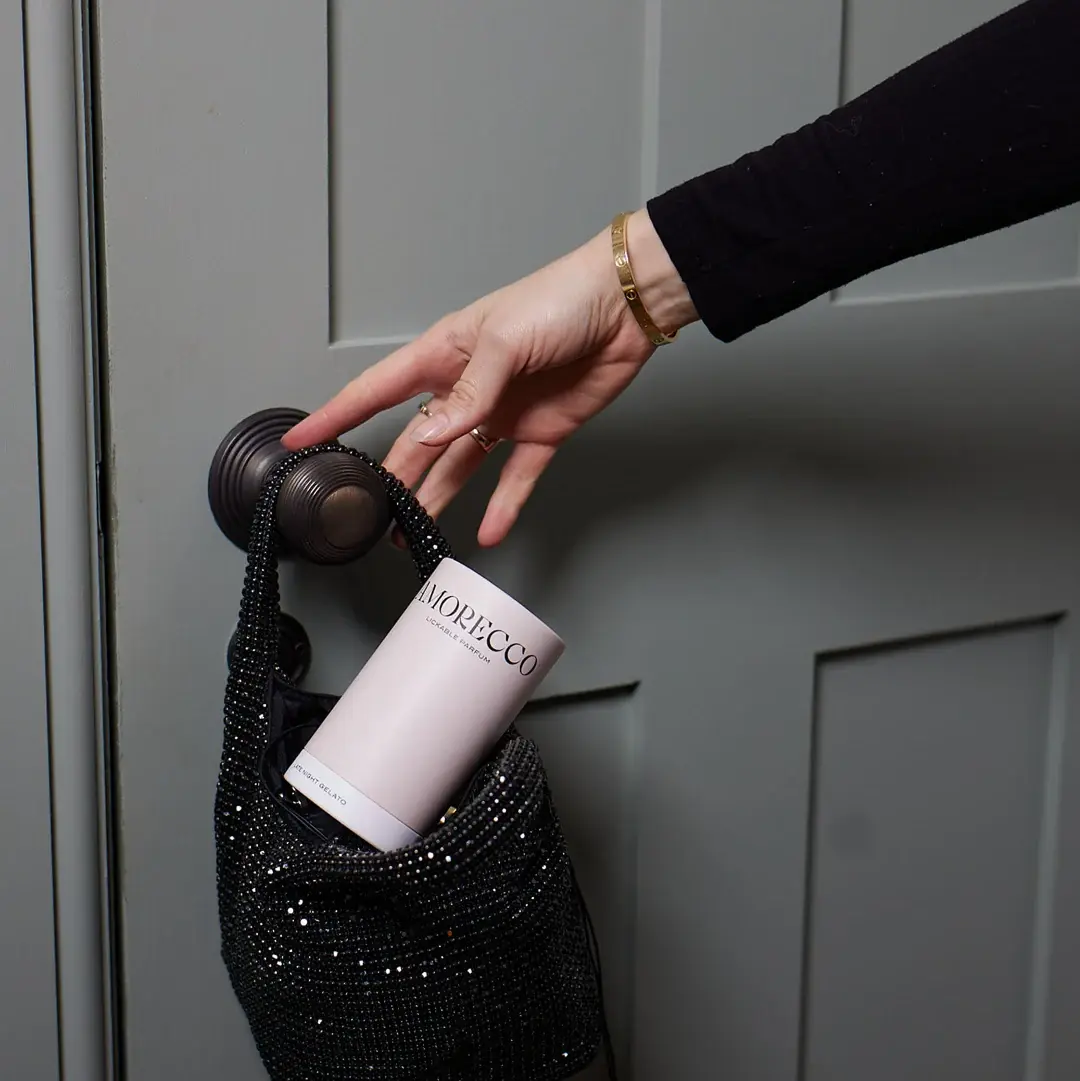
We successfully inserted a new category frame into both consumer and industry discourse, Amorecco was recognised as an intimacy product, brought straight into the bedroom; to weekend bags and special nights. And a PR-amplified cultural moment was engineered, including mainstream media attention, ITV's This Morning, Sheerluxe, Marie Claire who described the brand as positioning the “lickable fragrance” brand as a "category innovation within intimacy wellness."
Both mainstream and industry press used the same category language, confirming the positioning held without translation.
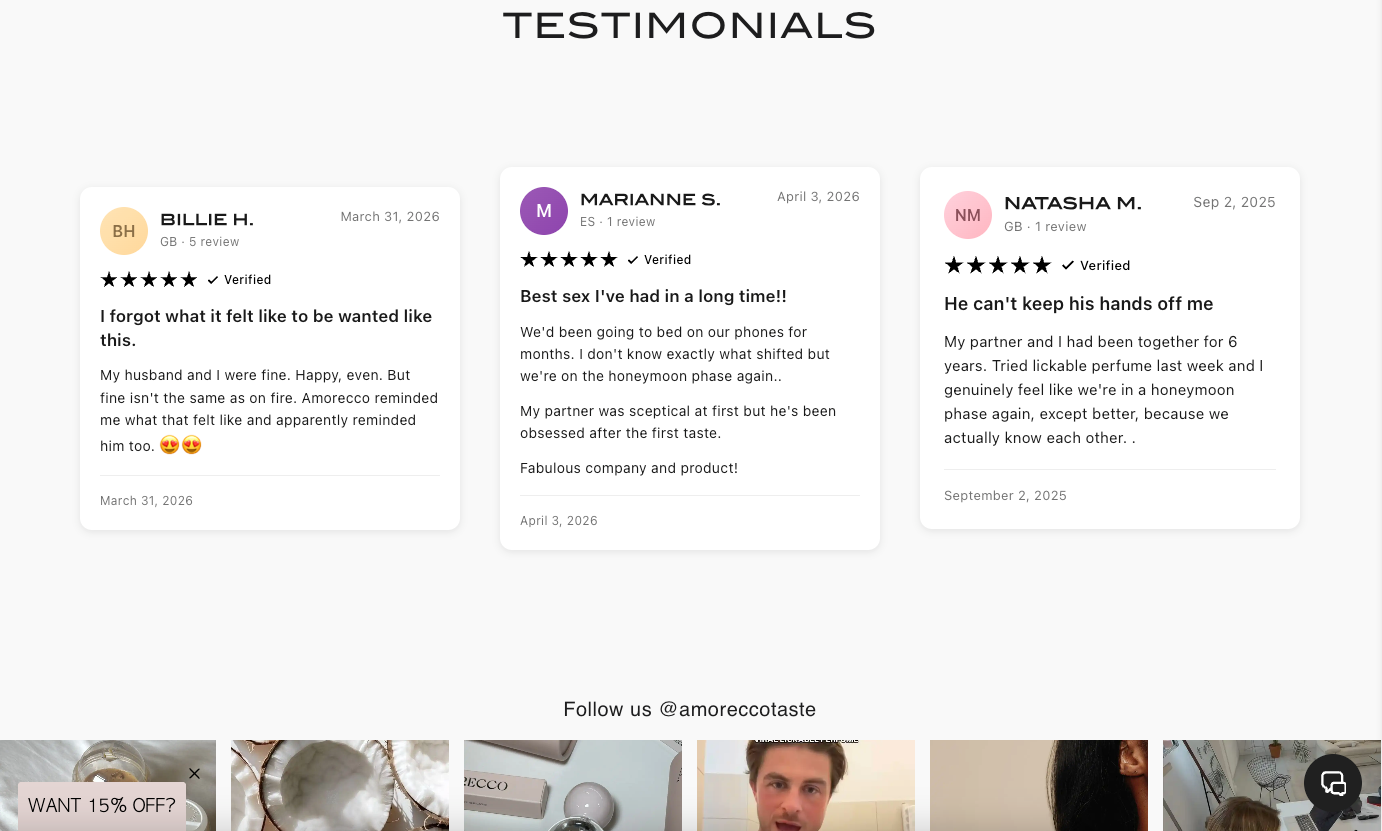
That clarity compounded through PR into TikTok virality, where creators repeated the same core idea, and into conversion — with hundreds of DTC sales in the initial launch window. The founder attributed success to the cateogry created, "more sales came more from the intimacy-wellness positioning than the perfume USP."
That attention converted into early commercial validation. Hundreds took to social media and review platform to declare the product was creating unforgettable intimacy in their lives, and Amorecco quickly expanded into new SKUs and invested back into the business; including international expansion.
Both mainstream and industry press used the same category language, confirming the positioning held without translation.
That clarity compounded through PR into TikTok virality, where creators repeated the same core idea, and into conversion — with hundreds of DTC sales in the initial launch window. The founder attributed success to the cateogry created, "more sales came more from the intimacy-wellness positioning than the perfume USP."
That attention converted into early commercial validation. Hundreds took to social media and review platform to declare the product was creating unforgettable intimacy in their lives, and Amorecco quickly expanded into new SKUs and invested back into the business; including international expansion.
"When we launched, we were saying ’this is a perfume with a USP’, but actually what really generates us sales is talking about intimacy wellness, confidence and women becoming more powerful in that moment–that is giving scalability."
Luce Grover, Amorecco
Bringing back permission for pleasure
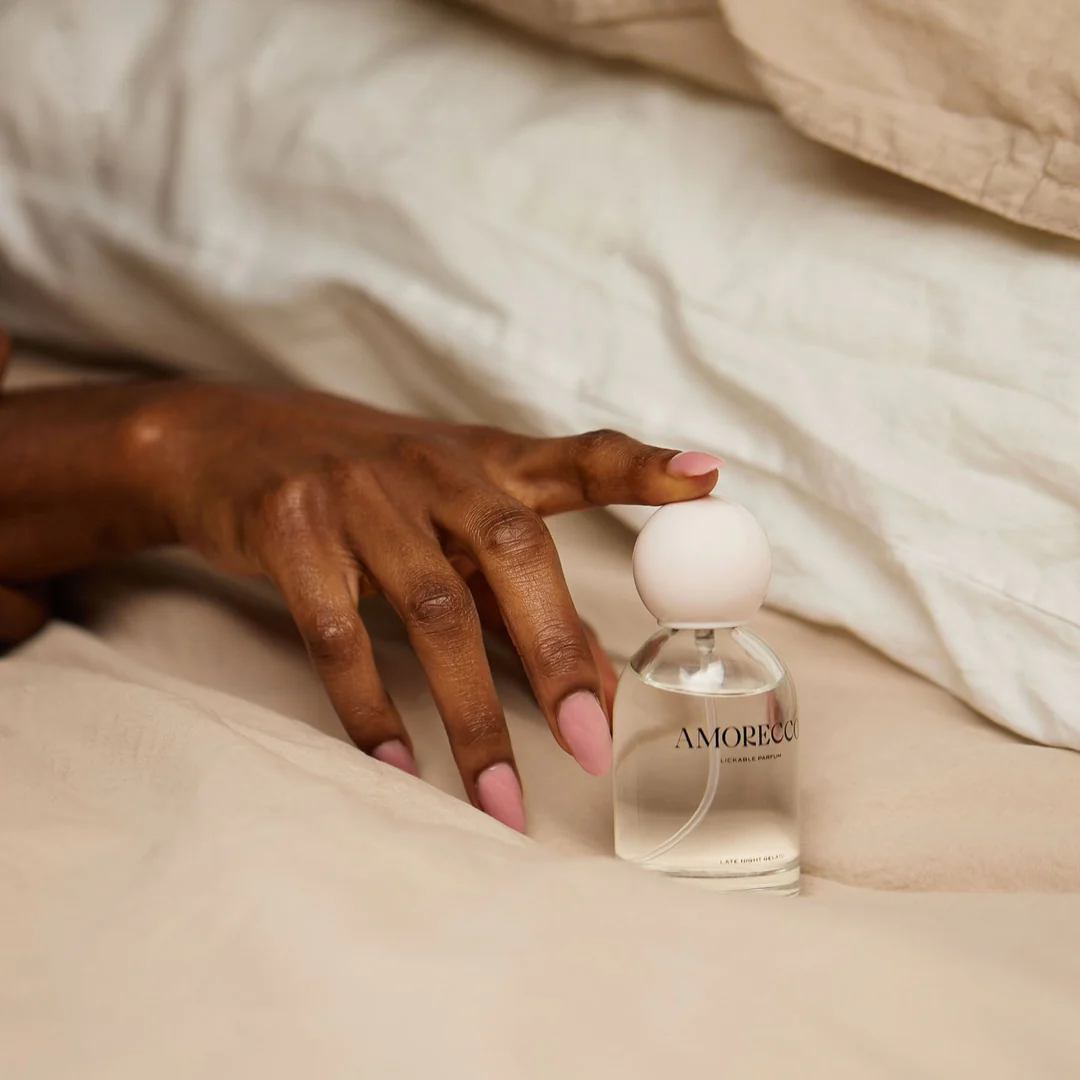
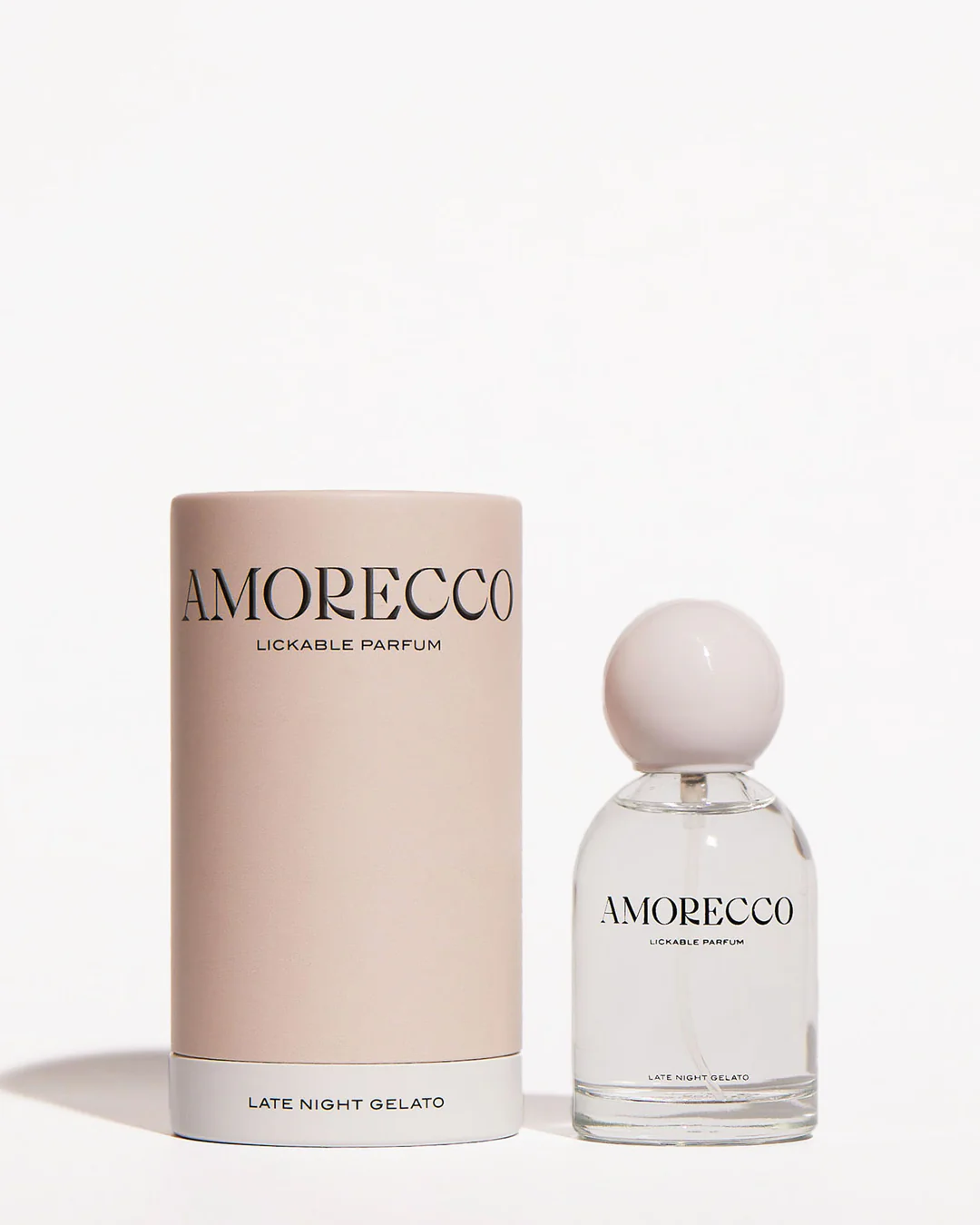
Defining the first-to-market lickable perfume as the must-have intimacy accessory
Our extensive category creation programme that included over 80 interviews, in-store and at-home ethnography showed people weren’t buying a scent—they were buying identity, presence and connection to special moments.
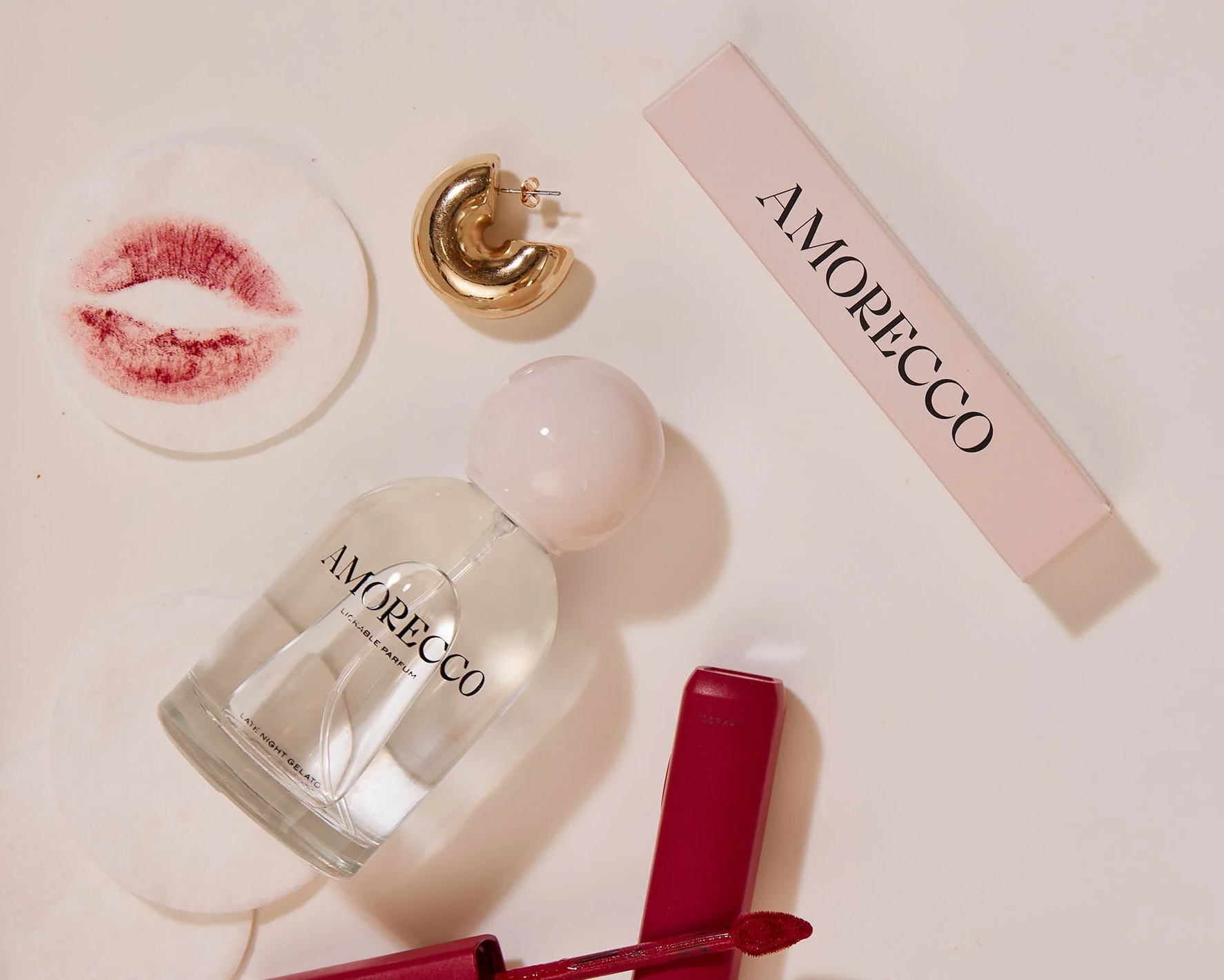
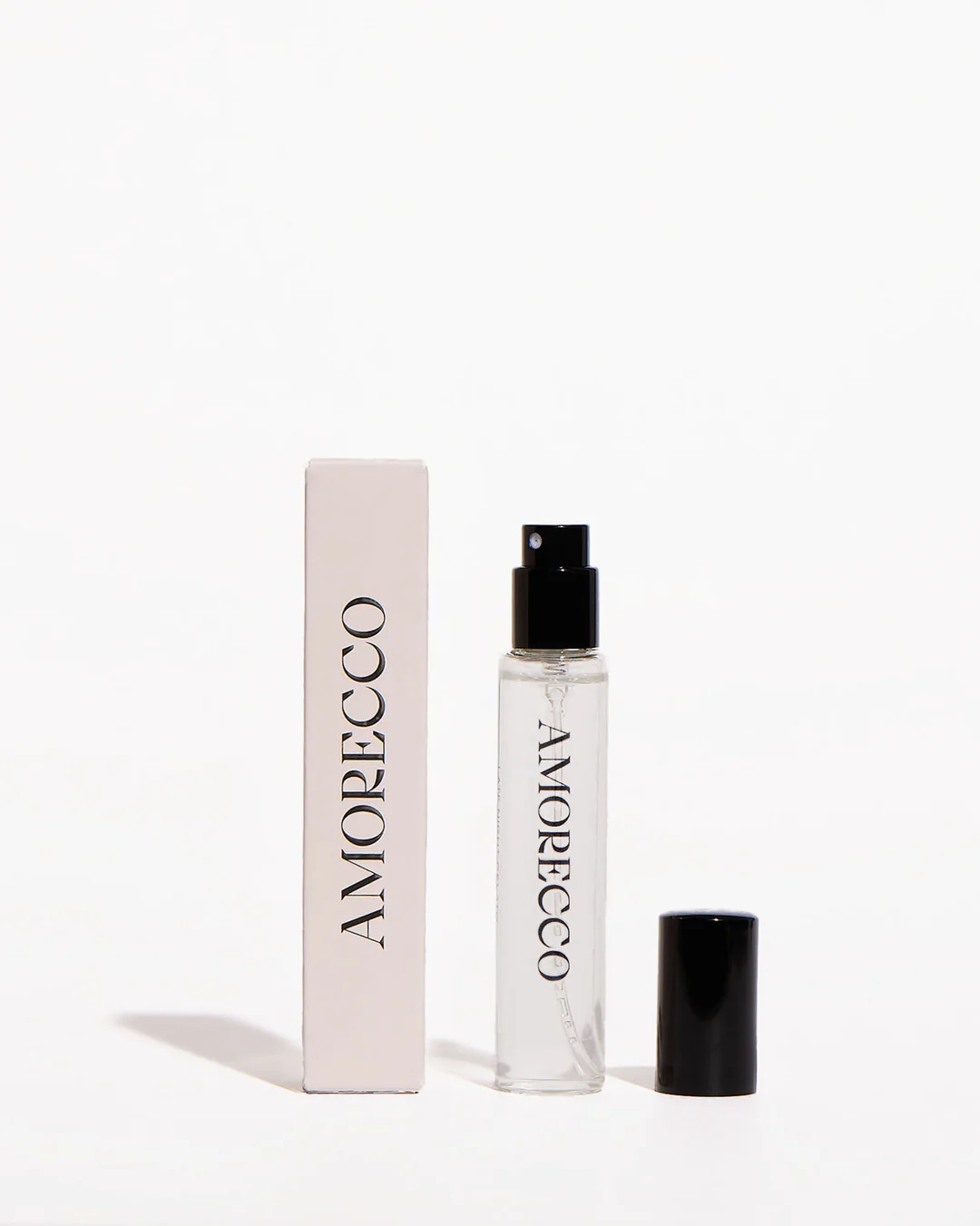
Our strategy defined a world where a perfume safe for consumption became synonymous with pleasure, play, and intimate connection. The visual identity, photography, and store were later brought to life by Desk Studio.
The result? A brand with the cultural clarity and emotional permission to be both provocative and premium.
Our strategy defined a world where a perfume safe for consumption became synonymous with pleasure, play, and intimate connection. The visual identity, photography, and store were later brought to life by Desk Studio.
The result? A brand with the cultural clarity and emotional permission to be both provocative and premium.
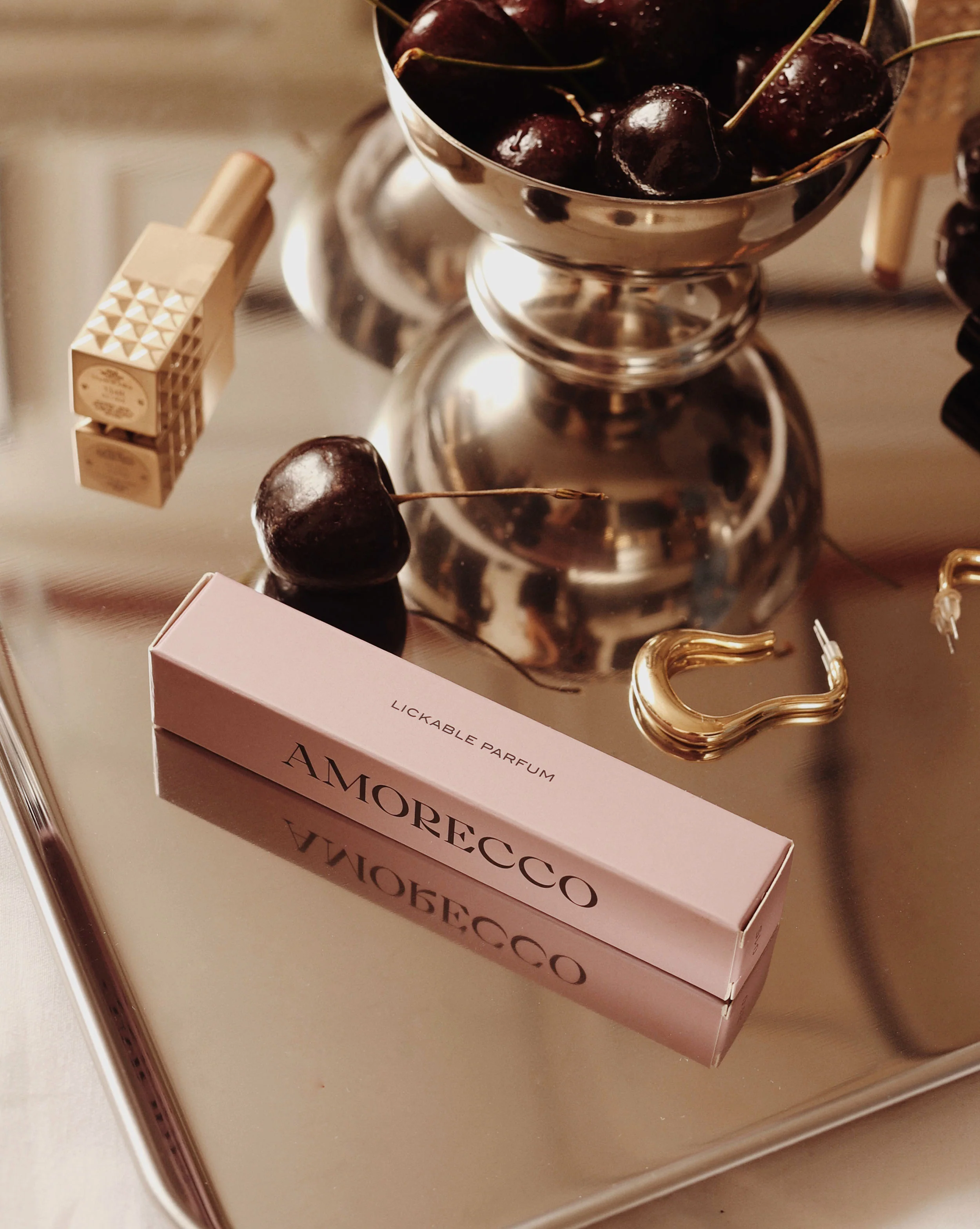
Problems with Feeling PleasureAmorecco came to us with the world’s first edible parfum — a rare category creation that fused scent and taste.
The ambition wasn’t small: position this as a new kind of luxury accessory, as emotionally resonant as it was sensorially disruptive. But the path wasn’t clear.
How would the product be used, who would buy it, what would inspire their purchasing behaviours and new intimacy rituals?
The intimacy and fragrance categories each came with their own constraints. Fragrance was crowded with heritage-heavy luxury and hyper-scientific innovation — leaving little space for something sensorial and emotional.Meanwhile, the intimate wellness space was fragmented and fraught. In the UK especially, sexuality is still swaddled in awkwardness; our cultural relationship with pleasure tends toward irony, innuendo, or silence.
“Wellness” becomes a vague corporate spiel, and “edible” risks being dismissed as a novelty. For a product designed to celebrate connection, the landscape was broken.
Launching Amorecco meant giving form to something culturally ambiguous — defining a space that didn’t yet exist. One that could cut through embarrassment with elegance, and create a culturally fluent language for modern intimacy.
The ambition wasn’t small: position this as a new kind of luxury accessory, as emotionally resonant as it was sensorially disruptive. But the path wasn’t clear.
How would the product be used, who would buy it, what would inspire their purchasing behaviours and new intimacy rituals?
The intimacy and fragrance categories each came with their own constraints. Fragrance was crowded with heritage-heavy luxury and hyper-scientific innovation — leaving little space for something sensorial and emotional.Meanwhile, the intimate wellness space was fragmented and fraught. In the UK especially, sexuality is still swaddled in awkwardness; our cultural relationship with pleasure tends toward irony, innuendo, or silence.
“Wellness” becomes a vague corporate spiel, and “edible” risks being dismissed as a novelty. For a product designed to celebrate connection, the landscape was broken.
Launching Amorecco meant giving form to something culturally ambiguous — defining a space that didn’t yet exist. One that could cut through embarrassment with elegance, and create a culturally fluent language for modern intimacy.
Find the confidence you've always had. Express the desires you've always held. Make more of every moment.
Unique sensory products for the natural powers of our bodies.
Creating deeper experiences through loving innovation and sensory centreing.
Unique sensory products for the natural powers of our bodies.
Creating deeper experiences through loving innovation and sensory centreing.
Intimate EconomicsWe applied the matter more framework to Amorecco’s category creation problem: we allow ourselves to be guided by the nuance of behaviour and emotion.
We question everything, seeking larger patterns to reinforce insight with integrity.
Research methods deployed included:
- 20+ contextual ethnographies & in-home observations
- 80+ one-to-one interviews with beauty editors, fragrance buyers, and consumers
- A dual-mode consumer survey probing both System‑1 predispositions and explicit buying behaviour
- A scent-focused competitive shopping audit, plus landscape mapping across fragrance, wellness, beauty, and sexual wellness
- Social listening, community analysis, and media trend reviews
- Over 30 industry reports and academic reviews—from Meltwater and Morgan Stanley to research on olfaction in sexuality.
Three Brand Drivers emerged:
Buying Identity
Every person we spoke with said they weren’t just buying a perfume—they wanted a fragrance that felt uncommon, unique, persmission to own a their own identity and sexuality. Scent is an intimate part of building self-concept and individuality.
The Desire to Be Desired
Buying a fragrance often tied to external validation, whether seeking romantic attention or social affirmation, scent became a tool. For partners or when courting, many consumers would intentionally defer to what others loved about them, finding their satisafaction in being desired.
Presence-Crafted Rituals
Consumers employ different scents for daily identity and for moments they want to feel extraordinary. Rachel Herz showed that combining taste and smell enhances memory encoding—exactly what Amorecco activates. And 70% of consumers will pay more for sensory-driven, and mindful products.*
The opportunity lay in multi‑sensory activation—taste, scent, touch, emotion—all in one, with the dazzling feeling of empowerment and affirmation. Elevating intimate moments with a deep somatic nostalgia and rich presence.
We question everything, seeking larger patterns to reinforce insight with integrity.
Research methods deployed included:
- 20+ contextual ethnographies & in-home observations
- 80+ one-to-one interviews with beauty editors, fragrance buyers, and consumers
- A dual-mode consumer survey probing both System‑1 predispositions and explicit buying behaviour
- A scent-focused competitive shopping audit, plus landscape mapping across fragrance, wellness, beauty, and sexual wellness
- Social listening, community analysis, and media trend reviews
- Over 30 industry reports and academic reviews—from Meltwater and Morgan Stanley to research on olfaction in sexuality.
Three Brand Drivers emerged:
Buying Identity
Every person we spoke with said they weren’t just buying a perfume—they wanted a fragrance that felt uncommon, unique, persmission to own a their own identity and sexuality. Scent is an intimate part of building self-concept and individuality.
The Desire to Be Desired
Buying a fragrance often tied to external validation, whether seeking romantic attention or social affirmation, scent became a tool. For partners or when courting, many consumers would intentionally defer to what others loved about them, finding their satisafaction in being desired.
Presence-Crafted Rituals
Consumers employ different scents for daily identity and for moments they want to feel extraordinary. Rachel Herz showed that combining taste and smell enhances memory encoding—exactly what Amorecco activates. And 70% of consumers will pay more for sensory-driven, and mindful products.*
The opportunity lay in multi‑sensory activation—taste, scent, touch, emotion—all in one, with the dazzling feeling of empowerment and affirmation. Elevating intimate moments with a deep somatic nostalgia and rich presence.
“When we launched, we were saying ’this is a perfume with a USP’ , but actually what really generates us sales is talking about intimacy wellness, confidence and women becoming more powerful in that moment–that is giving scalability.”
Bending Behaviour BarriersAcross the body of primary research we interviewed over 80 individuals. Only 6 had bought an *unknown scent online. 57% of those who did, had it recommended by close friends or family.
But over two thirds of sexual wellness and intimacy sales are made online.
In the UK we’re too embarrassed to explore pleasure products in person, yet we won’t invest in sensory accessory without experiencing them.
So how do we build a digital brand and experiences that can embrace beyond the sensory shortfall? Our strategy was designed to make a digital brand feel sensory.
But over two thirds of sexual wellness and intimacy sales are made online.
In the UK we’re too embarrassed to explore pleasure products in person, yet we won’t invest in sensory accessory without experiencing them.
So how do we build a digital brand and experiences that can embrace beyond the sensory shortfall? Our strategy was designed to make a digital brand feel sensory.
"A product category that combines sex scents, the gourmand trend and a multi-sensory, synesthesia-like journey seems like it should be impossible. But interestingly, that's exactly what the new 'lickable perfume' brand Amorecco promises to do."
Marie Claire UK
Shaping the Space for Intimacy
Applying Kantar’s ‘Find New Space’ accelerator blueprint, our goal was to define not just a product, but a new usage occasion and category narrative.This meant building a brand that didn’t merely fit in the intimate wellness aisle—but would drive us to explore it.
Approach:Interviews & Ethnography:
We interviewed users about their rituals around intimacy, self-care, and special occasions.
Competitive Landscape:
Mapped out the emerging "intimate wellness" category, identifying white space in emotional tone and language partnered with industry experts.
Psychographic Insights:
Identified the shift from performance-based sexual wellness to mindful, sensory-centred self-connection.Amorecco wasn’t an intimacy product. It was an experience and connection amplifier.
Applying Kantar’s ‘Find New Space’ accelerator blueprint, our goal was to define not just a product, but a new usage occasion and category narrative.This meant building a brand that didn’t merely fit in the intimate wellness aisle—but would drive us to explore it.
Approach:Interviews & Ethnography:
We interviewed users about their rituals around intimacy, self-care, and special occasions.
Competitive Landscape:
Mapped out the emerging "intimate wellness" category, identifying white space in emotional tone and language partnered with industry experts.
Psychographic Insights:
Identified the shift from performance-based sexual wellness to mindful, sensory-centred self-connection.Amorecco wasn’t an intimacy product. It was an experience and connection amplifier.

D2C Desire
We were acutely aware that in emerging D2C spaces, brands that build mental availability through emotive clarity and functional distinction can command both price premium and social currency. Our solution was architected to do both.
Our brand strategy pivoted around a new organising idea: multi-sensory intimacy for presence, connection and play.
Emotive Positioning:
Framed Amorecco not as functional or provocative, but as deeply sensorial and soulful.
Naming Strategy:
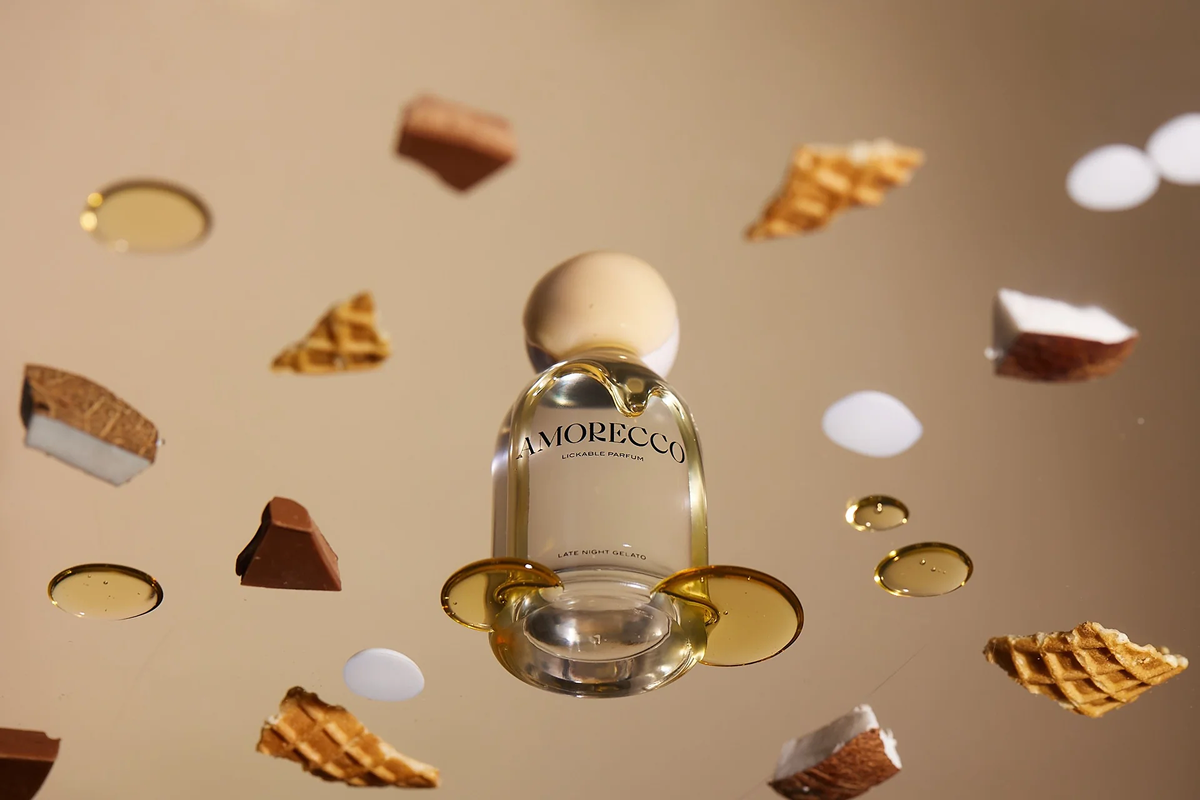
Proposed evocative but relatable names with effortlessly nostalgic connotations like "Late Night Gelato”
Narrative Themes:
Developed brand pillars that explored intimacy as self-care, pleasure as wellness, and presence as luxury.
Product Strategy:
The product language focused on the sensory; touch and taste to immediately communicate the product’s difference, and borrowed from elegantly from beautility to communicate innovation and product efficacy.
Category Clarity:
Structured the brand around an emerging space of intimate sensory accessories, soulful interactions and presence as the antidote to modern days of disconnection.
We were acutely aware that in emerging D2C spaces, brands that build mental availability through emotive clarity and functional distinction can command both price premium and social currency. Our solution was architected to do both.
Our brand strategy pivoted around a new organising idea: multi-sensory intimacy for presence, connection and play.
Emotive Positioning:
Framed Amorecco not as functional or provocative, but as deeply sensorial and soulful.
Naming Strategy:
Proposed evocative but relatable names with effortlessly nostalgic connotations like "Late Night Gelato”
Narrative Themes:
Developed brand pillars that explored intimacy as self-care, pleasure as wellness, and presence as luxury.
Product Strategy:
The product language focused on the sensory; touch and taste to immediately communicate the product’s difference, and borrowed from elegantly from beautility to communicate innovation and product efficacy.
Category Clarity:
Structured the brand around an emerging space of intimate sensory accessories, soulful interactions and presence as the antidote to modern days of disconnection.
"UK sexual wellness startup Amorecco is combining flavor and scent to build intimacy confidence – a space its co-founder says is brimming with promise and opportunity."
Premium Beauty News
Delicious Delivered
We successfully inserted a new category frame into both consumer and industry discourse, Amorecco was recognised as an intimacy product, brought straight into the bedroom; to weekend bags and special nights.
The creative agency took this strategic groundwork into bold beautiful directions. Their provocative, personal and sensual execution was designed to unlock emotional resonance and reframe intimacy as something that could feel as delicious as it looked.
And a PR-amplified cultural moment was engineered, including mainstream media attention, ITV's This Morning, Sheerluxe, Marie Claire who described the brand as positioning the “lickable fragrance” brand as a "category innovation within intimacy wellness."
Both mainstream and industry press used the same category language, confirming the positioning held without translation.
That clarity compounded through PR into TikTok virality, where creators repeated the same core idea, and into conversion. That attention converted into early commercial validation. Hundreds took to social media and review platform to declare the product was creating unforgettable intimacy in their lives, and Amorecco quickly expanded into new SKUs and invested back into the business; including international expansion.
We successfully inserted a new category frame into both consumer and industry discourse, Amorecco was recognised as an intimacy product, brought straight into the bedroom; to weekend bags and special nights.
The creative agency took this strategic groundwork into bold beautiful directions. Their provocative, personal and sensual execution was designed to unlock emotional resonance and reframe intimacy as something that could feel as delicious as it looked.
And a PR-amplified cultural moment was engineered, including mainstream media attention, ITV's This Morning, Sheerluxe, Marie Claire who described the brand as positioning the “lickable fragrance” brand as a "category innovation within intimacy wellness."
Both mainstream and industry press used the same category language, confirming the positioning held without translation.
That clarity compounded through PR into TikTok virality, where creators repeated the same core idea, and into conversion. That attention converted into early commercial validation. Hundreds took to social media and review platform to declare the product was creating unforgettable intimacy in their lives, and Amorecco quickly expanded into new SKUs and invested back into the business; including international expansion.
Mattermore provided Research and Strategy services, before writing Brand Voice and Product Naming. Creative is from Amorecco.